Using the right ACP sheet thickness is essential for achieving the right balance of strength, appearance and cost. Whether you are planning interior decoration, shop signage or exterior cladding, thickness influences panel rigidity and suitability. This guide explains common ACP thickness options, compares 3 mm and 4 mm sheets, and helps you select the right option for your project.
What Is ACP Sheet Thickness?
It refers to the total thickness of an Aluminium Composite Panel, measured in millimetres. An ACP sheet consists of two thin aluminium layers bonded to a central core.
The most-preferred options are 3 mm and 4 mm panels, while other sizes are available for specific applications. The selected ACP panel thickness affects rigidity, weight, installation requirements and overall performance.
What Are the Common ACP Sheet Thickness Options?
Different projects require different panel specifications. Understanding the available options makes it easier to choose materials that suit your design, installation conditions and budget.
3 mm ACP Sheet – Where Is It Used?
A 3 mm ACP sheet is commonly used for signage, interiors and lightweight decorative applications. Its relatively low weight makes it convenient to handle, cut and install where heavy-duty structural performance is unnecessary.
Common application areas:
- Display banners and signboards
- Front of retail outlets
- Interior walls
- Fancy partitions
- Light architectural features
For example, a retail showroom may use 3 mm panels for branded displays or decorative wall surfaces.
However, suitability depends on panel dimensions, support spacing and installation conditions. A 3 mm panel should not automatically be considered suitable for every exterior application.
4 mm ACP Sheet – Where Is It Used?
A 4 mm ACP sheet is a good choice to use for cladding projects where greater panel rigidity is required. When other construction details are comparable, its increased thickness generally provides better stiffness than a 3 mm alternative.
Common application areas:
- Building elevations
- Commercial complexes
- Large panels
- Fronts of commercial stores
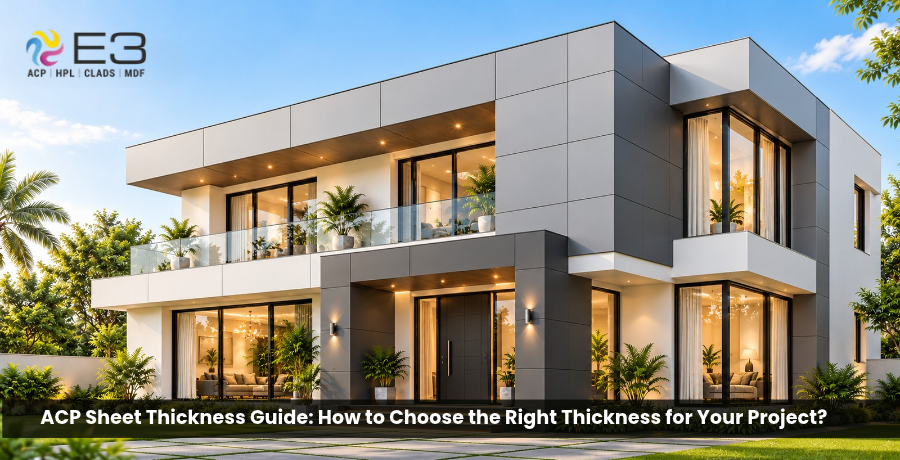
A commercial building with a modern ACP facade may use 4 mm panels to achieve clean lines and consistent surface alignment.
However, ACP panel thickness alone cannot determine exterior suitability. Aluminium skin thickness, core specification, fixing design and wind-load requirements must also be evaluated.
What About Other ACP Thickness Options?
Besides 3 mm and 4 mm, manufacturers may offer additional thicknesses for specialised applications.
A 2 mm panel, where available, may be used for lightweight displays or small decorative installations, subject to manufacturer recommendations.
A 6 mm panel can be specified for selected architectural applications requiring increased thickness, depending on the panel construction and engineering requirements.
Availability & specifications vary across product ranges.
3 mm vs 4 mm ACP Sheet: What Is the Difference?
The main difference between them is their overall thickness, which influences weight, rigidity and potential applications.
This simple ACP thickness guide highlights the practical differences between both options.
| Feature | 3 mm ACP | 4 mm ACP |
| Weight | Generally lighter | Generally heavier |
| Rigidity | Lower, for comparable construction | Higher, for comparable construction |
| Cost | Often more economical | Usually higher |
| Best for | Signage, interiors, decorative applications | Façades, exterior cladding, commercial projects |
| Large panels | Requires careful support design | Often preferable, subject to engineering checks |
The actual performance of a 3 mm or 4 mm ACP sheet also depends on aluminium skin thickness, core material and support spacing. Therefore, compare complete product specifications rather than relying solely on nominal thickness.
How to Choose the Right ACP Thickness?
Choosing appropriate thickness takes the complete understanding of any project’s requirements.
Consider these essential factors:
- Project location
- Indoor or outdoor use
- Panel size
- Wind and load conditions
- Required rigidity
- Budget
Always confirm the manufacturer’s technical specifications before making a final decision.
Which ACP Sheet Thickness Is Best for Interior Projects?
For many interior applications, a 3 mm ACP sheet can be a practical choice because of its manageable weight and suitable rigidity when properly supported.
It may be used for wall panels, partitions, false ceiling designs, retail interiors and decorative features.
However, panel dimensions, mounting arrangements and applicable fire-safety requirements should guide the final selection.
Which ACP Sheet Thickness Is Best for Exterior Projects?
For building façades, commercial exteriors, shop fronts and exterior cladding, a 4 mm ACP sheet is commonly considered due to its comparatively greater rigidity.
However, selecting the right Aluminium composite panel thickness involves more than choosing between 3 mm and 4 mm.
External installations require careful assessment of panel thickness, core type, aluminium skin thickness, fixing systems, wind loads and site conditions. Fire-safety compliance must also be verified.
Final Thoughts
Installing the right ACP sheet based on the optimum thickness depends on where and how the panel will be used. While 3 mm panels can suit many interior and signage applications, 4 mm panels are commonly considered for exterior cladding.
Use this guide as a starting point, but always review technical specifications and installation requirements. The right choice combines appearance, practical performance and long-term value.
Why Choose E3 ACP?
E3 ACP offers standard-grade solutions for creating appealing elevations, interiors and signage. With over 30 years of expertise in metal composite materials, the company focuses on design versatility, manufacturing quality and dependable performance. Its collection includes decorative finishes suited to diverse architectural requirements, helping designers and project owners explore materials for their spaces.
Frequently Asked Questions (FAQs)
What is the standard ACP sheet thickness?
Common ACP sheet thickness options include 3 mm and 4 mm. The 3 mm option is frequently used for signage and interiors, while 4 mm panels are commonly considered for architectural cladding. Other thicknesses depend on the manufacturer.
Is 3 mm or 4 mm ACP better?
None of the thicknesses is universally accepted. A 3 mm sheet perfectly suits normal interiors. Contrarily a 4 mm sheet delivers higher rigidity. Always choose the right thickness according to your needs.
Does ACP thickness affect durability?
Absolutely, ACP panel thickness can influence rigidity and resistance. Durability also depends on aluminium skin thickness and other relevant factors. It is important for you to know that greater thickness alone does not guarantee longer service life.